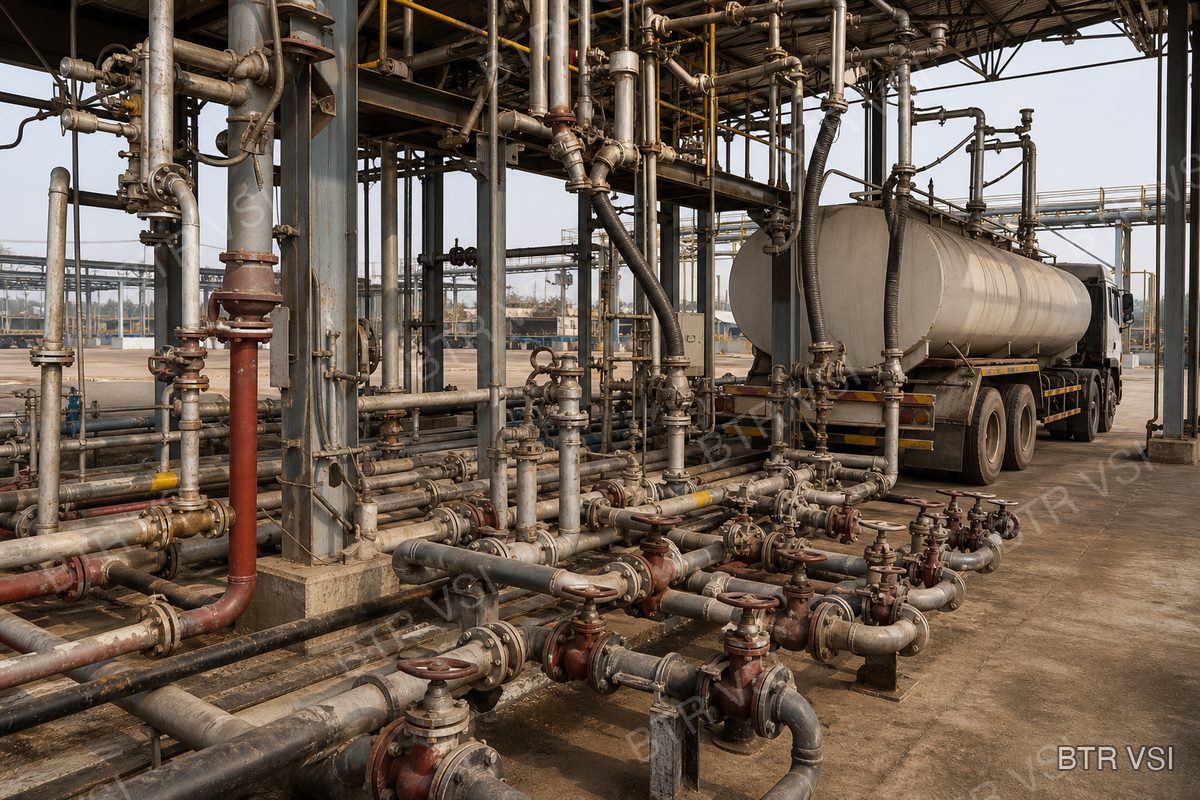
A fuel depot listed its plug valve fleet for one online service campaign. About 30 valves were cleaned and sealed, and our signed service report records most responding well. The depot then bought its own injection gun and asked us to train its team.
Case study
About 30 plug valves serviced in one depot-wide campaign
One campaign covered plug valves across the tank farm, pump houses and loading gantry.
The valves and their duty
The depot listed its plug valve fleet across the tank farm, pump houses and filling gantry. The list named 11 valves of 10 inch and 19 of 8 inch.
It added 12 valves of 4 inch and 25 of 3 inch. A named fleet list let the campaign move valve by valve without guesswork.
Duties covered diesel, petrol, ethanol and biodiesel blends at one operating depot.
Plug valves in fuel service depend on a sealant film for tight, smooth operation. When the film degrades, valves turn hard and seats can begin to pass.
The intervention
We ran a two-step online programme across the whole listed fleet.
- Purge cleaner went in first to displace old sealant and fuel residues.
- Lubricant sealant followed, rebuilding the working film on each serviced valve.
- Depot operators were coached on valve care during the same visit.
No valve was removed and the depot stayed in normal operation throughout. The lubricant versus sealant guide explains why the two steps stay separate.
What our products did
Purge cleaner softens and moves the hardened material a fuel valve collects. Lubricant sealant then rebuilds the film that plug valves need to turn and seal.
The order of the two steps matters on every valve we treat. Sealant injected over debris traps the problem inside the valve instead of removing it.
A minority of valves need escalation or repair, and service shows which ones.
The outcome and the follow-on
About 30 valves were serviced, and our signed report records most responding well. The depot later bought its own high-pressure gun and asked for a demonstration.
Training was then delivered and documented, with further on-site sessions scheduled. That is the pattern we aim for: fleet service first, then operator self-sufficiency.
Coached operators can run routine top-ups and call us for the harder valves.
Review injection equipment if your site plans to run its own top-ups.
See the field results from the full directory of live valve cases.
Related cases
More results from the field
Jammed plug valve cleaned on a live diesel line
The client ordered the next round of service three weeks later.
Read the caseA passing valve attended on pay-on-success terms
The operator paid under its own success-only terms, then commissioned a preventive campaign.
Read the case
Start with the valve condition
Tell us about a similar valve problem
Share the valve type, duty, location and the fault you found. An engineer replies within 24 hours.