
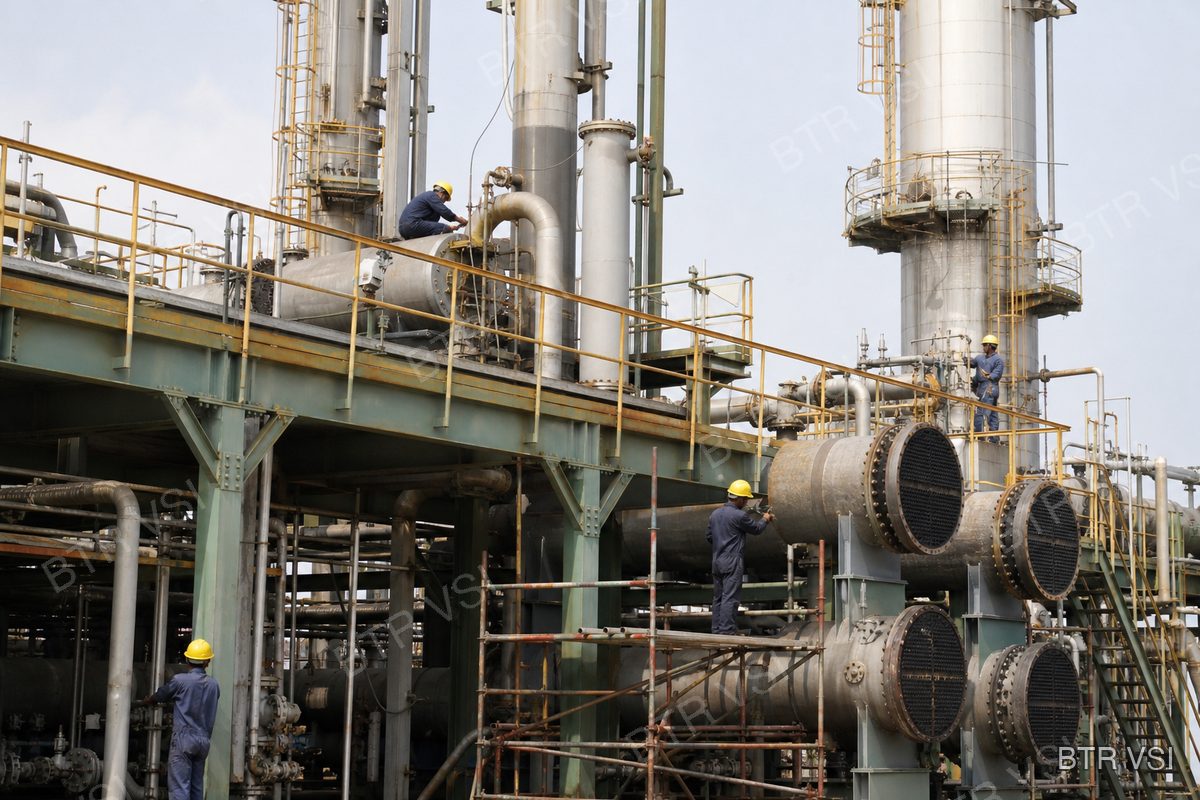
A government petrochemical complex reported valve passing at its gas dehydration unit. Repeat cleaning and sealing campaigns ran under one standing order, timed to plant shutdowns. By the second campaign, invoices already recorded second, third and fourth services of the same valves.
Case study
A recurring valve programme timed to plant shutdowns
Four mobilisations ran across three years, each scheduled by the plant itself.
The valve and its duty
The valves served the gas dehydration unit of a government petrochemical complex. They included 16 inch ball valves in 300 and 600 class.
The plant reported passing during normal operation, meaning closed valves still let fluid through. Passing at a dehydration unit undermines isolation during unit maintenance and process upsets.
A ball valve seals on seat rings, and debris or dry service can damage them.
Our ball valve passing guide explains why these valves pass and how treatment helps.
The intervention
We ran repeat cleaning and sealing campaigns under one standing order. The plant timed each campaign to its own shutdown calendar.
Working to the shutdown calendar keeps valve treatment inside windows the plant already planned. A standing order removes procurement delay from each repeat campaign.
The plant simply calls the visit once its shutdown window is confirmed. Each campaign then follows the same controlled sequence.
- Clean each valve first to move debris and old sealant clear of the seats.
- Note the response, because cleaning shows how much trouble is debris rather than damage.
- Follow with sealant in controlled amounts within equipment and fitting ratings.
- Watch pressure response during injection and stop on any abnormal sign.
- Close each visit with a service report for the plant's records.
The record across three years
Four mobilisations ran across three years under the one standing order. The first campaign took four site days, tracked day by day by the plant.
By the second campaign, invoice lines recorded second, third and fourth services of the 16 inch valves. The third campaign ran six days, timed by the plant to a partial shutdown.
The plant then requested a fourth mobilisation about six months later. We publish no sealing result for this case, because the record contains none.
The record is a government plant repeatedly scheduling one service into its shutdown calendar. Recurring programmes suit valves that need scheduled attention rather than one-off repairs.
See the field results from the full directory of 22 field cases. You can also explore field services to plan a recurring programme at your plant.
More field results
Related cases
12 valves treated during a fertiliser plant turnaround
From one emergency call-out to a fixture in the shutdown calendar.
Read the caseA two-day trial that won a 30-valve follow-on order
The client set the test itself: prove the work in two days, then earn the fleet.
Read the case
Start with the valve condition
Tell us about the valves giving you trouble
Share the valve type, duty, location and the fault you found. An engineer replies within 24 hours.