
Pressure decay and double-block-and-bleed checks can assess seat integrity when boundaries, volumes and conditions are controlled. Acoustic checks can locate likely turbulence, but they do not prove tightness or quantify a standard leakage rate. Every result is limited to its test arrangement and conditions.
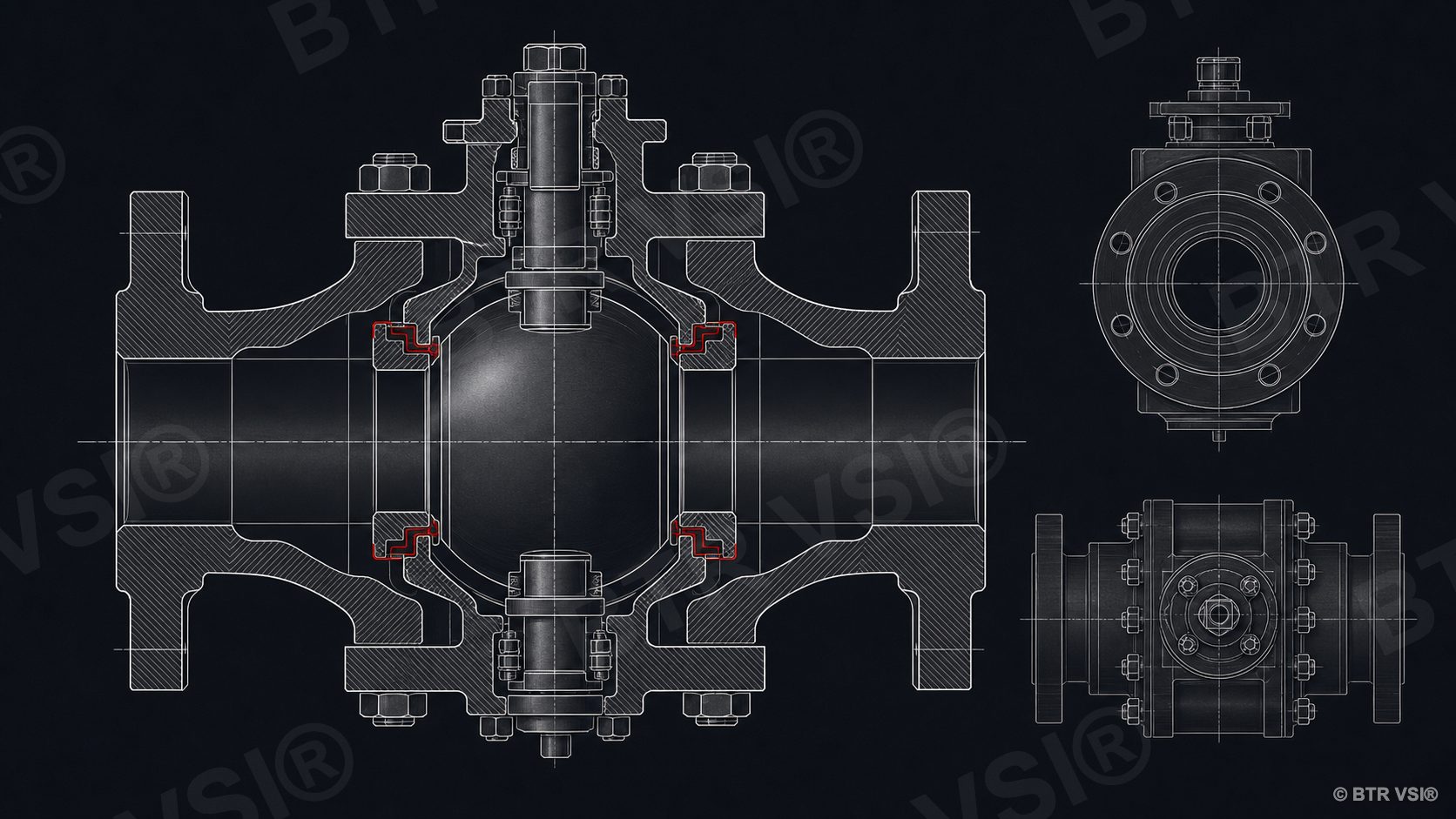
Testing · Evidence limits
Field seat-leak testing methods compared
What pressure decay, DBB bleed and acoustic screening can actually prove.
Define the test question before choosing a method
A useful field test starts with one clear question. Is the aim to screen a valve, prove a temporary isolation, compare a trend, or assess leakage against an approved acceptance basis?
Record the valve position, pressure direction, medium, test boundaries, instrument range and stabilisation state. Temperature changes, trapped volumes and connected branches can alter readings without a seat fault. A result without this context cannot support a strong conclusion.
Position and full travel are separate evidence. The closed versus sealed guide explains why neither replaces a seat test.
Agree the acceptance basis before testing. Changing it after seeing the result weakens the decision record and can hide uncertainty.
Pressure decay: useful when the volume is controlled
Pressure decay tracks pressure within a defined isolated volume over time. A repeatable fall can indicate leakage through a boundary. The method becomes stronger when the test volume, temperature, instruments and all possible leak paths are controlled.
Decay does not identify the leaking component by itself. External leakage, instrument connections, cooling, gas absorption and another boundary can produce a similar trend. Stable pressure also does not prove zero leakage if the instrument cannot resolve the change.
Confirm unexpected decay by checking boundaries and repeating the approved test under comparable conditions. Do not convert a field pressure trend directly into API 598 or ISO 5208 language. Those standards depend on their specified test basis.
DBB bleed: evidence from the cavity
A double-block-and-bleed check observes the space between two closed barriers. After the cavity is safely managed under site procedure, continued pressure or flow at the bleed can indicate leakage across one boundary.
The basic observation may not identify which seat passes. Trapped cavity pressure, thermal change, body-cavity relief behaviour, a leaking bleed valve or both seats can confuse the result. Valve-specific seat direction also matters.
Use controlled steps and valve drawings to assign the source. The DBB isolation guide covers the diagnostic logic, while isolation arrangements explains why DBB and DIB terms should not be assumed from appearance.
Acoustic screening: fast, useful and limited
Acoustic instruments listen for energy linked with turbulence across a pressure drop. They can help rank valves and identify where a closer test is justified. They are useful when direct flow observation is unavailable.
Noise is not unique to seat leakage. Nearby control valves, pumps, vibration, flashing, branch flow and poor sensor contact can create false positives. Low noise can also occur when the pressure difference is too small to generate a clear signal.
Acoustic screening therefore indicates, rather than confirms, a passing seat. Confirm the finding with a controlled pressure or flow test that suits the valve and site. Our passing valve guide sets out the decision routes after confirmation.
For network work, keep the same method and evidence fields across repeated surveys. Field valve services can support testing, records and repair planning.
Choose the method before the field visit. Prepare a simple test sheet. Record every boundary and gauge. Mark changes made during the test. A later reviewer should be able to repeat the same arrangement.
Common questions
Field seat-leak testing questions
Does pressure decay prove that one valve seat leaks?
Not by itself. It shows pressure change within the test volume. External leaks, temperature change, instruments or another boundary can cause the same result.
Can a DBB bleed check identify which seat is passing?
Sometimes, but only with controlled steps and valve-specific flow-path knowledge. Trapped pressure, relief behaviour and the bleed valve can confuse the observation.
Can acoustic testing measure an API 598 or ISO 5208 leakage class?
No. Acoustic testing screens for likely turbulence. Standard leakage language needs the specified test basis and cannot be inferred directly from sound.
What makes a field seat test repeatable?
Define the boundaries, volume, pressure direction, medium, instruments, temperature state, valve position and acceptance basis. Record the same fields each time.
Need a defensible seat test?
Send the test arrangement. An engineer replies within 24 hours.
Include boundaries, pressures, valve design, instruments and the decision the test must support.