An 8 inch, 600 class mainline sectionalising valve was passing on a products pipeline. Cleaner alone left it passing at the same rate, so the operator directed escalation to heavy-grade sealant. Our post-job report recorded no passing during observation, and the operator accepted the work.
Case study
A documented before and after on an 8 inch sectionalising valve
A mild treatment failed first. The record shows how graded escalation works.
The valve and its duty
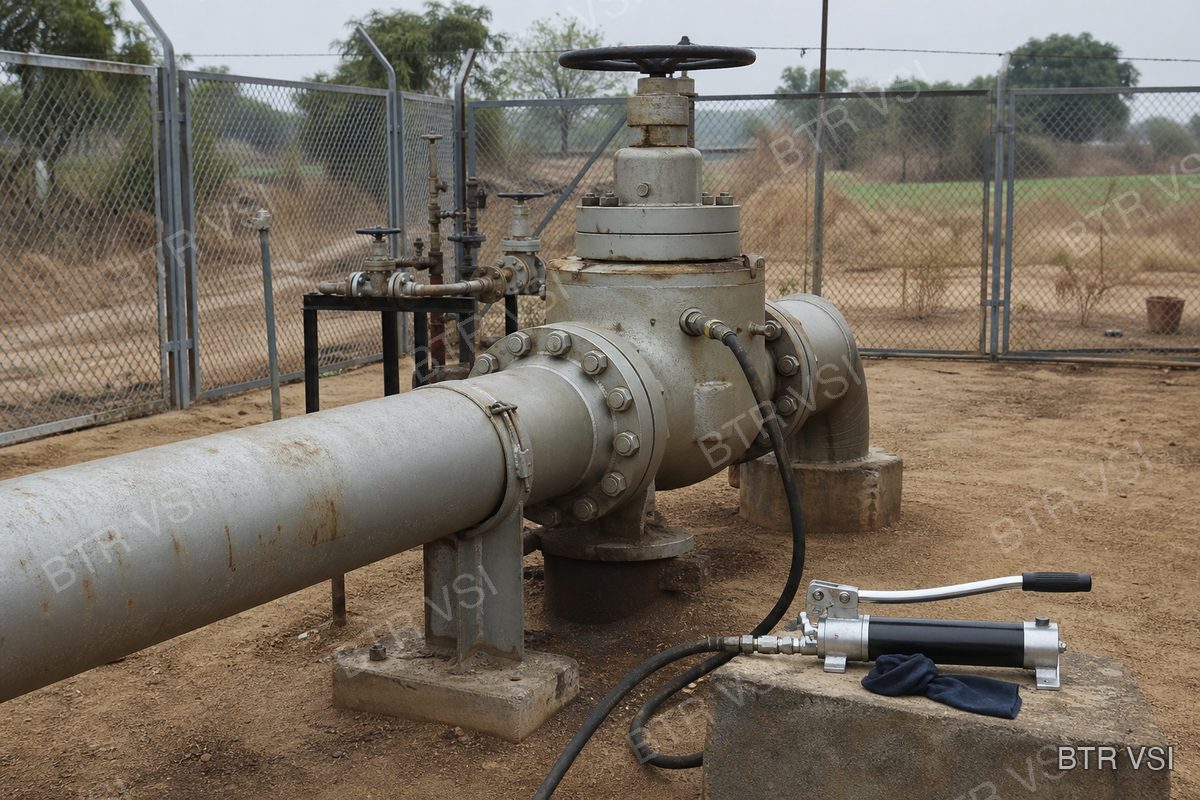
An 8 inch, 600 class mainline sectionalising valve was passing. It sat on a products pipeline.
A sectionalising valve must isolate its section of line on demand. A passing seat makes that isolation uncertain.
Operators usually notice a passing sectionalising valve when a section fails to hold pressure. The signs indicate a seat problem, and a proper test confirms it.
What had been tried before
The operator's own team injected cleaner first, working to our written procedure.
It documented in writing that the valve was passing at the same rate as before. That client-recorded outcome was useful evidence: fouling alone did not explain the passing.
The intervention
Our team then attended the station for a two-day intervention.
- Day one ran a cleaner and lubricant sealant round on the valve.
- On the operator's own direction, treatment escalated to a heavy-grade sealant.
- Six gun packs of heavy-grade sealant went in under high pressure.
Escalation is graded on purpose. A mild treatment goes first, and heavier grades follow only when the evidence supports them.
Heavy grades need high injection pressure to move through the fittings and reach the seats. The amounts stay controlled, and the pressure response is watched throughout.
Each step was recorded, so the before and after sit in one document trail.
What our products did
The cleaner ruled out simple fouling as the cause of the passing.
The lubricant sealant was the middle step of the graded ladder. The heavy-grade sealant then did what the milder grades could not.
The outcome and the record
Our post-job report recorded that the valve responded to the heavy-grade sealant. It also recorded that no passing was noticed during the observation period. The operator accepted the completed work and settled the payment.
The same report noted the seats were not badly scratched or damaged. A seat that responds to sealant usually still has serviceable sealing faces.
This record is why we ask operators to try the mild step first. It saves heavier treatment for the valves that actually need it.
Our guide on sectionalising valves that fail tests covers this decision route. Browse more field results from pipeline valve work.
Explore valve products
Related cases
More results from passing valves
Passing mainline gate valve corrected
The operator confirmed in writing that the valve was corrected.
Read the caseNew-network passing valves treated before gas charging
Mid-job, the network owner's engineer directed us to service further valves at once.
Read the case
Start with the valve condition
Tell us about the valves giving you trouble
Share the valve type, operating duty, location and fault you found. An engineer replies within 24 hours.