A state-owned pipeline operator reported a passing 16 inch, 600 class mainline gate valve. Our engineer injected sealant online, and the operator confirmed the correction in writing. When oil passing returned about six months later, the operator booked a planned repeat visit.
Case study
Passing 16 inch mainline gate valve corrected on a petroleum pipeline
The operator confirmed the correction in writing, then booked a planned top-up.
The valve and its duty
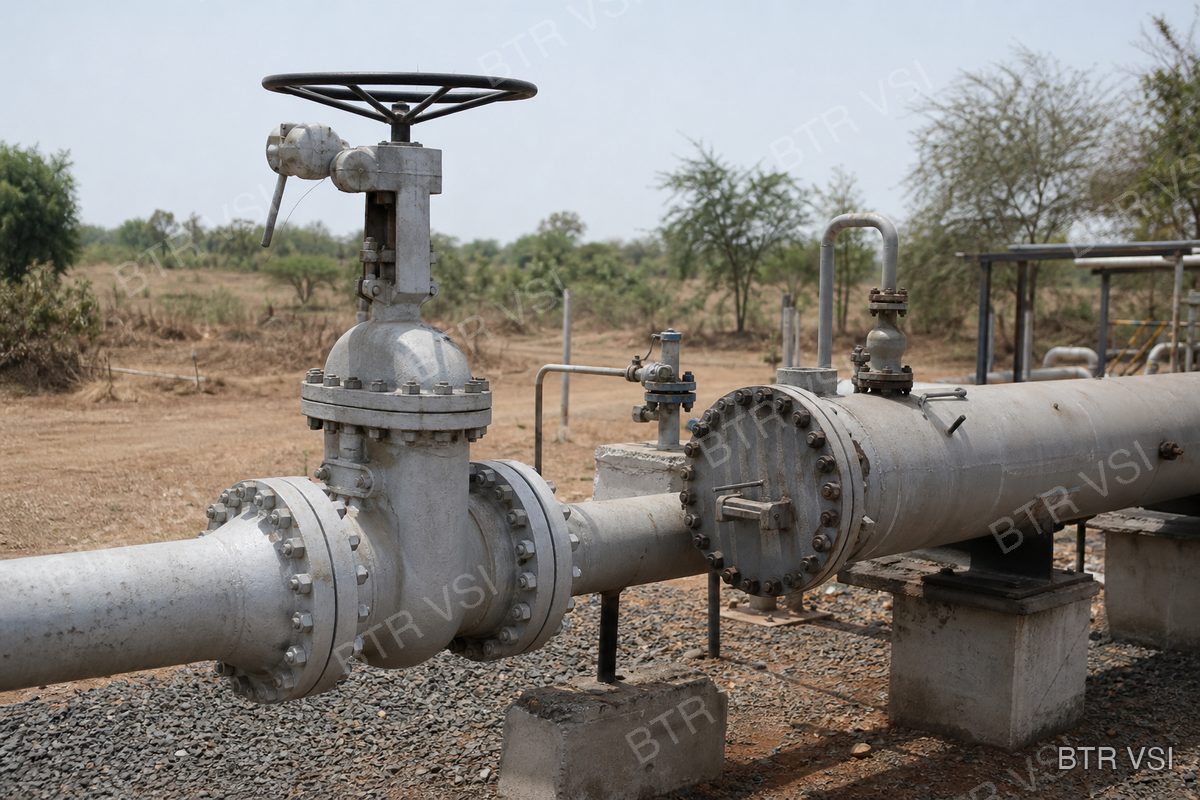
A state-owned pipeline operator reported a passing 16 inch, 600 class gate valve.
The valve isolated a scraper barrel on a cross-country petroleum line. A passing valve there weakens the isolation the barrel depends on.
Scraper barrels are opened to load and receive pigs. The isolating valve must hold back line pressure while people work at the barrel.
The valve was an API 6D unit, commissioned only three years earlier. Passing is not only an old-valve problem, and age alone predicts little.
Seat damage can come from debris, scoring or wear in service. The treatment response, not the age, shows what the seats can still do.
The intervention
Our engineer injected seat sealant into the valve on site, working online. That meant no line shutdown and no product outage for the correction.
- The line stayed in service while the injection ran.
- Injection of this kind runs in controlled amounts, within the fitting ratings.
- The pressure response is watched throughout, with clear stop-work rules.
Sealant renews the sealing surfaces the service has damaged. It does not rebuild missing metal, which is why the response is watched.
The operator reviewed the site visit report and signed it. A signed report matters because the operator, not the contractor, owns the verdict.
The result
The operator confirmed in writing that the valve was corrected.
About six months later, it wrote that oil passing had returned. Its own words were that the valve was corrected then. It booked a repeat visit rather than raising a complaint.
That follow-up is the honest part of the record. Damaged seats need scheduled top-ups, not a single treatment.
A planned top-up returns the valve to duty at a time the operator chooses. Waiting for failure instead invites an unplanned outage.
Recording each visit also shows how long a treatment holds on this valve. That interval is what sets a sensible top-up schedule.
Our top-up schedules guide explains how operators plan these repeat visits. Browse more field results from pipeline valve work.
Explore field services
Related cases
More results from pipeline valves
A documented before and after
Our post-job report recorded no passing under observation, and the operator accepted and paid.
Read the caseCrude gate valve stem leak treated
Our technician flew in, completed the injection and flew out the same day.
Read the case
Start with the valve condition
Tell us about the valves giving you trouble
Share the valve type, operating duty, location and fault you found. An engineer replies within 24 hours.