A terminal operator at a major west-coast port ran three large critical crude valves. We held a three-year maintenance contract with twice-yearly online service visits. Five visits ran across three years, and the operator itself asked to renew.
Case study
A three-year valve maintenance contract at a marine crude terminal
Three large crude valves kept in service across a three-year contract.
The valves and their duty
A terminal operator at a major west-coast port ran three large critical valves.
The scope covered a 36 inch, 150 class gate valve and a 16 inch gate valve. A 48 inch ball valve completed the set of three. All three valves worked on the terminal's crude oil receipt facilities.
Valves of this size are slow to source and hard to replace. Keeping them serviceable in place matters more than on smaller lines.
A 48 inch ball valve is a major asset in its own right. Removing one for repair needs cranes, spares and a long outage.
Site conditions
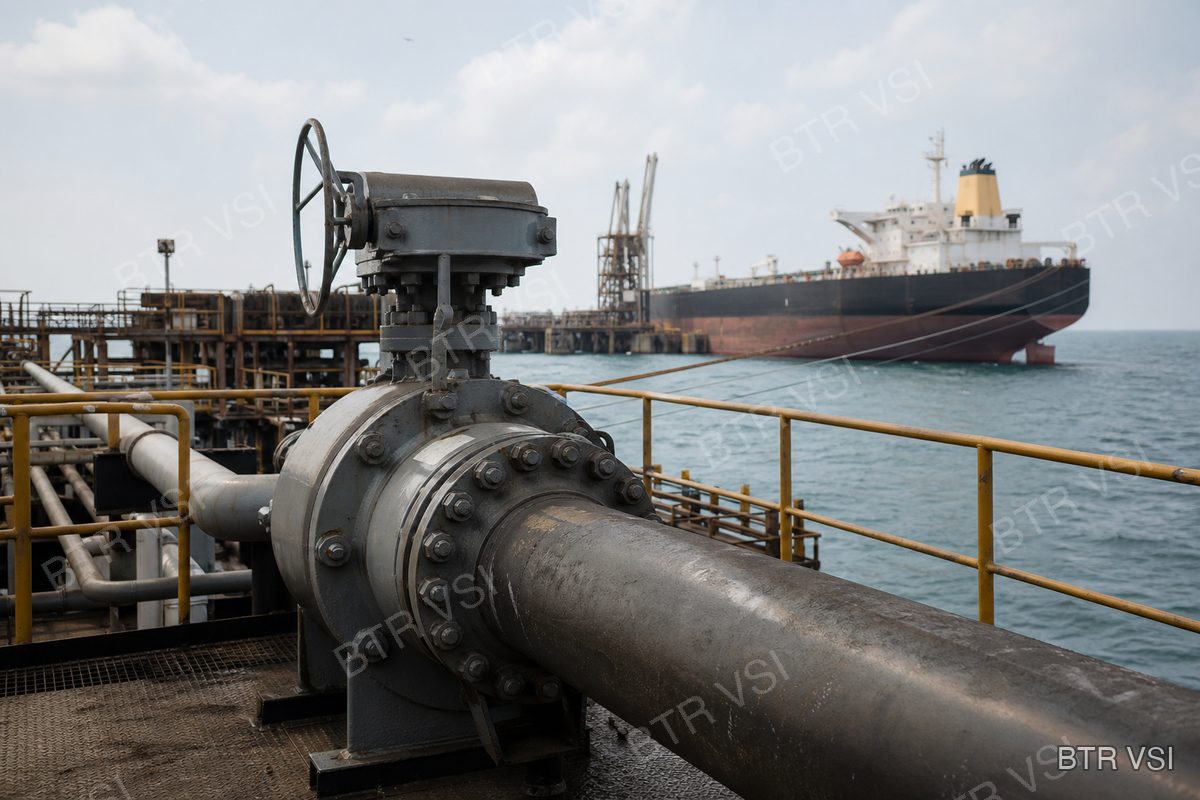
The valves sat in coastal crude service at a marine terminal.
Coastal sites expose valve externals to salt-laden air. Regular attention helps an operator find external corrosion and leaks early. Crude duty adds its own fouling load on seats and cavities.
The intervention
We held a valve maintenance contract with the terminal for three years.
- Twice-yearly online service visits covered the three valves, a frequency the client set.
- Emergency call-outs were attended with next-day mobilisation under the same agreement.
- Each visit closed with the condition of the valves on record.
One emergency call reported the 36 inch valve leaking very badly. We mobilised to the terminal the very next day under the contract. The client returned the signed service report the same day we asked.
One visit treated the 48 inch ball valve with high-potency cleaner and stem-area attention. A later visit ran a two-man crew with a service sheet per valve.
A standing contract removes the delay of raising a fresh order for every visit. The valves get attention on a planned cycle instead.
Online visits meant the valves stayed in service while they were treated. Twice-yearly attention also builds a condition record, and trends across visits show more than any single inspection.
The format suits sites where a few large valves carry most of the risk. Planned care and emergency cover then sit under one agreement.
The outcome and the record
Five service visits ran across three years.
The operator itself asked to renew, and recorded its satisfaction with the service in writing. Its renewal request sought an extension of the arrangement to 2028. A renewal requested by the client speaks for the service itself.
Our offshore and marine valve guide covers this environment in more depth. Browse more field results from contract and campaign work.
Explore field services
Related cases
More results from long-term work
A recurring programme timed to shutdowns
Four mobilisations ran across three years under one standing order.
Read the caseA two-day trial won a 30-valve order
Satisfied with the trial, the operator awarded a 30-valve servicing lot.
Read the case
Start with the valve condition
Tell us about the valves giving you trouble
Share the valve type, operating duty, location and fault you found. An engineer replies within 24 hours.