Choose injection equipment only after checking line pressure, valve fittings, required product volume, site access and available power. A hand gun gives portable, stroke-by-stroke control. Air-operated equipment suits repeated or larger-volume work when the site permits its use.
Knowledge · Injection equipment
Choosing injection equipment by pressure, volume and field constraints
A practical comparison of hand guns and air-operated equipment for valve work.
Start with the work, not the equipment name
Manual and air-operated systems can both support controlled valve injection. Neither type is right for every valve, site or maintenance plan.
Before choosing either, confirm four gates. The valve must have injection fittings in good condition. Its design and service must suit injection. Site rules and the permit-to-work must allow the job. Operations must also permit the valve to remain in service.
Pressure rise, flow change and sound may suggest how product is moving. They do not confirm an effective repair. The confirming check is the site-approved valve test after treatment.
1. Check pressure across the complete connection
Injection pressure must overcome line pressure and resistance inside the valve path. However, equipment capacity never overrides the rating of another part.
Check the gun, hose, coupler, adapter and valve fitting as one system. The lowest permitted rating governs the assembled connection. Read our guide to what equipment pressure ratings permit before selection.
A pressure response outside the agreed range is a stop-work signal. It may indicate a blocked path, wrong connection or valve condition needing assessment. Do not force the next stroke.
2. Match delivery method to product volume
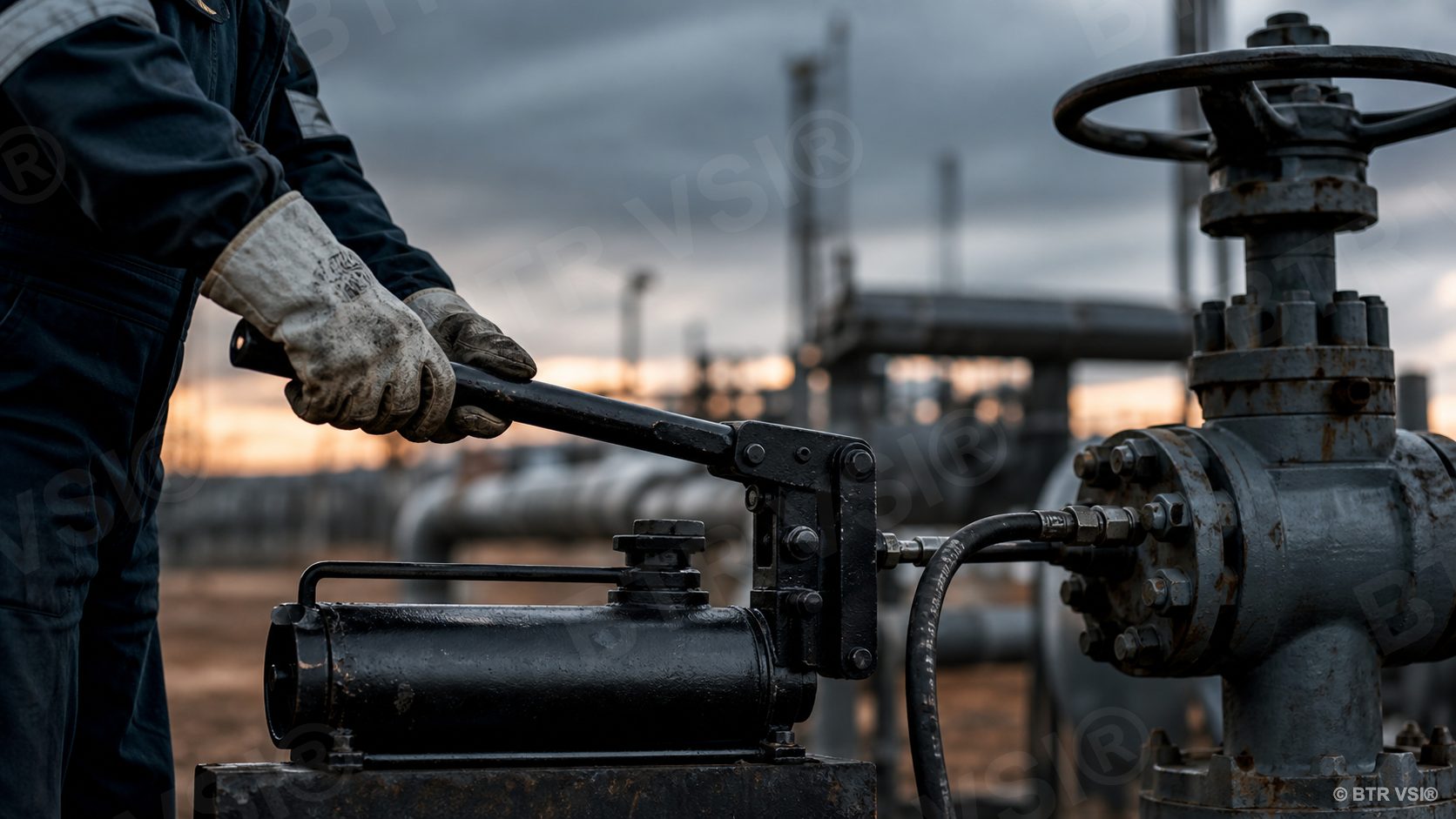
A manual gun suits work where the operator needs direct control over each stroke. It is also easier to carry when access is limited.
The BTR450D hand gun is an industry-standard manual option for portable valve servicing. Its selection still depends on the complete pressure path, product condition and site procedure.
Air-operated equipment supports repeated injection and larger maintenance programmes. The BTR 550D has 10,000 PSI capacity, a 100:1 ratio and a double-acting piston. These features support delivery, but do not set the permitted pressure for a valve task.
Volume alone should not drive the choice. Controlled amounts, recorded delivery and pressure response remain essential with either method. Review the wider BTR VSI injection equipment range for the available equipment classes.
3. Test the field constraints before mobilisation
- Access. Check the route, working space and stable equipment position around the valve.
- Air supply. An air-operated gun needs a permitted and dependable supply at the work point.
- Handling. The team must move every component without damaging hoses, fittings or seals.
- Control. The operator needs a clear view of pressure and connection condition throughout injection.
- Contamination control. Open ends, couplers and product containers must remain clean before connection.
If these controls cannot be maintained, change the method or stop. Convenience never justifies an unstable connection or poor observation.
4. Build one coherent injection system
The selected gun is only one part of the pressure system. A suitable setup includes compatible hoses, couplers and adapters, plus inspection and care controls.
Mixing available parts without checking ratings can create a hidden weak point. A familiar coupler may also be worn, contaminated or wrong for the fitting.
The field team should record the assembled equipment, valve details and planned stop conditions. It should also know how the gun was cleaned, stored and inspected. Our sealant gun care guide explains that preparation.
5. Use a simple selection decision
- Confirm injection is allowed for the valve, medium and operating state.
- Establish line pressure and every component rating from controlled records.
- Estimate the work volume without treating that estimate as a target dose.
- Choose manual control for portable, limited-volume work where it fits the task.
- Choose air-operated delivery for repeated work where access, air and controls are suitable.
- Define stop-work rules and the confirming valve test before starting.
Where records conflict or the valve condition remains unclear, seek a proper assessment. Equipment choice cannot resolve uncertainty about the valve itself. Review the injection pressure rules when defining the task controls.
Common questions
Manual and air-operated injection questions
Is a higher-capacity gun always the better choice?
No. Capacity is only one selection factor. Line pressure, fitting ratings, required volume, access, air supply and site controls govern the safe choice.
When does a manual sealant gun make sense?
A manual gun suits portable work and controlled delivery where the operator needs direct control over each stroke. The complete pressure path must still be checked.
When should a team consider air-operated equipment?
Air-operated equipment can suit repeated or larger-volume work when a permitted air supply, stable access and clear operating controls are available.
Does equipment choice confirm that injection will repair the valve?
No. Pressure and flow response are screening evidence. Confirm the result with the site-approved valve test, and stop if the response is unclear or abnormal.
Choose equipment for a real task
Send the field constraints. An engineer replies within 24 hours.
Include valve type, line pressure, fitting details, access limits and expected work volume.