A 10,000 PSI rating states an equipment ceiling under its defined conditions. It does not permit injection at that pressure on every valve. Actual work is governed by line pressure, the lowest component rating, valve and fitting condition, OEM limits and the approved site procedure.
Knowledge · Injection equipment
10,000 PSI injection equipment: what the rating does and does not permit
Why equipment capacity never replaces a task-specific pressure limit and safe work plan.
A rating is a boundary, not a target
Pressure capacity describes an equipment limit under stated conditions. It is not the planned injection pressure for every valve task.
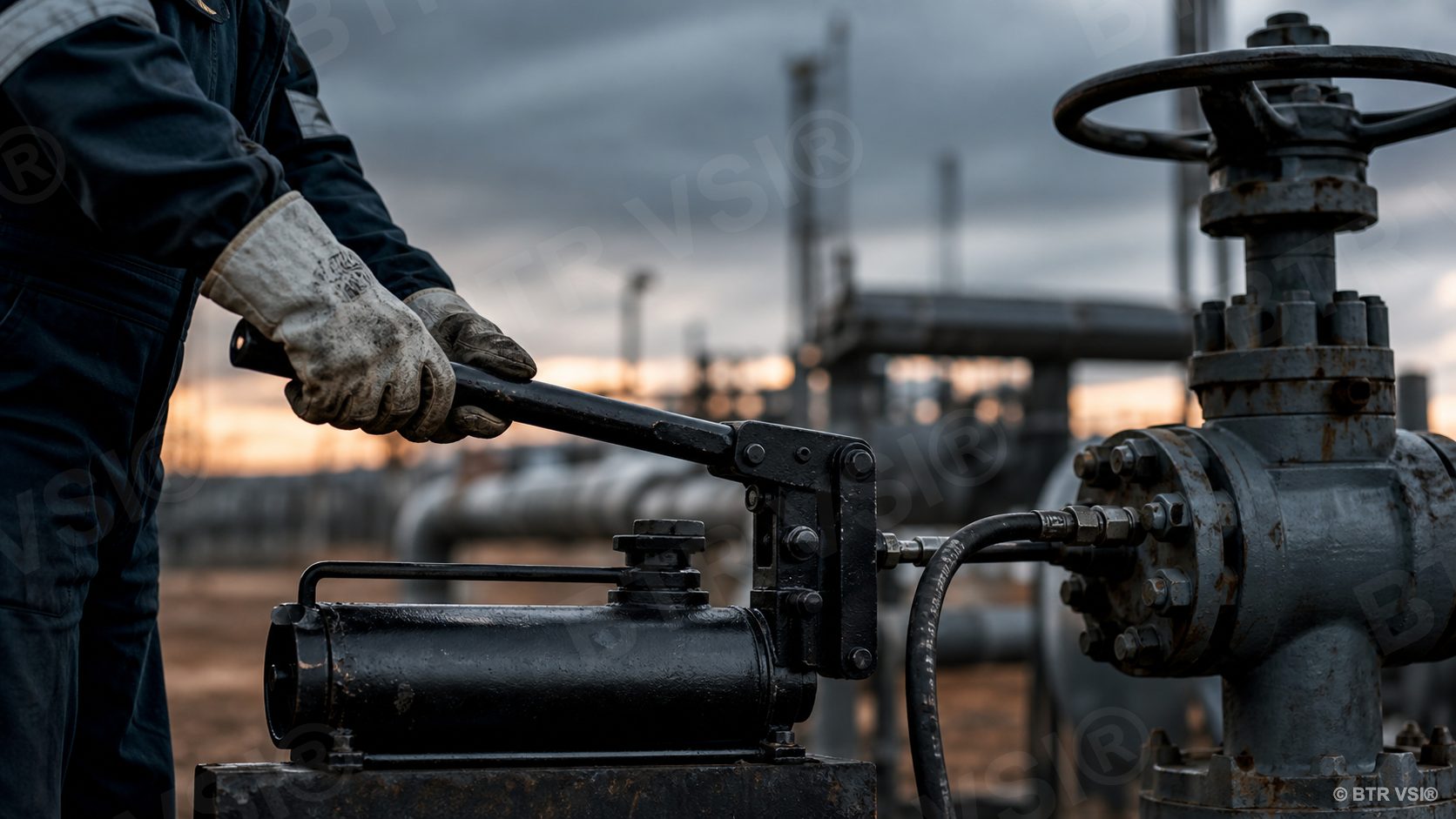
The BTR 550D air-operated gun has 10,000 PSI capacity, a 100:1 ratio and a double-acting piston. Those public equipment facts describe the gun. They do not change any valve, hose, coupler or fitting limit.
Before any recommendation, confirm the valve has injection fittings in good condition. The valve design and service must suit injection, and site rules and the permit-to-work must allow the job.
1. Find the limit across the whole pressure path
The pressure path begins at the gun and ends inside the valve injection system. Every part between those points matters.
- Confirm the permitted rating for the selected injection equipment.
- Confirm ratings for the hose, coupler and every adapter.
- Confirm the valve fitting type, condition and permitted limit.
- Check the valve maker's guidance for injection and service conditions.
- Apply the site procedure and any lower operating restriction.
The lowest permitted limit governs the assembled system. Read the related guide to hoses, couplers and adapters before connecting equipment.
2. Separate line pressure from injection pressure
Injection equipment must overcome line pressure and resistance in the intended path. That need does not allow uncontrolled pressure increase.
The approved plan should define how pressure is observed, how product amounts are controlled and when work stops. It should also state the confirming valve test.
Pressure rise can suggest increasing resistance or a restricted path. It cannot show exactly where the resistance sits. The cause could involve the fitting, internal passages, old product or valve condition.
If the response differs from the plan, stop. Do not assume that more pressure will clear the path.
3. Understand what 10,000 PSI does not permit
- It does not permit work above a lower hose, coupler, adapter or fitting rating.
- It does not permit injection into a valve without a suitable injection system.
- It does not prove the fitting is open, sound or connected to the intended path.
- It does not replace OEM limits, site isolation rules or operational approval.
- It does not confirm that pressure response means successful product distribution.
- It does not allow an operator to continue after a stop-work condition appears.
These limits apply whether the team selects a hand gun or air-operated system. Our equipment selection guide covers that decision.
4. Define pressure controls before the task
A competent plan begins with verified records, not memory. The team should know the line pressure, component limits, fitting condition and expected response before connection.
Controlled injection uses measured amounts within equipment and fitting ratings while watching pressure response. It never means injecting until a leak stops.
Common stop-work conditions include unexpected pressure rise, leakage, movement, damaged equipment, loss of indication and any change outside the agreed plan. The full high-pressure safety rules explain the discipline required.
The site-approved test must confirm the result. Pressure behaviour, noise and flow indication remain screening evidence only.
5. Escalate conflicting or missing information
Do not choose the more convenient figure when records conflict. Pause until the equipment, fitting and valve limits are verified.
An unreadable marking is not a rating. A familiar component is not evidence that its present condition is acceptable. An earlier successful task does not set today's permitted pressure.
Use the equipment page to identify the BTR VSI equipment class, then seek task-specific guidance. The sealant injection guide explains where pressure control fits within the wider work.
When safe limits cannot be established, the honest endpoint is a proper assessment. No injection task should proceed on an assumed ceiling.
Common questions
Injection pressure rating questions
Does a 10,000 PSI rating allow injection at 10,000 PSI?
No. The rating is an equipment ceiling under defined conditions. Line pressure, the lowest component rating, OEM limits and the approved site procedure govern actual work.
Which rating governs an assembled injection system?
The lowest permitted rating across the gun, hose, coupler, adapters and valve fitting governs the assembled pressure path.
Does pressure rise confirm that sealant reached the valve seat?
No. Pressure rise is screening evidence and may have several causes. Stop if the response is abnormal, then use the site-approved valve test to confirm the result.
What should happen when pressure records conflict?
Stop planning the injection task until the equipment, fitting and valve limits are verified. Never select the more convenient figure or rely on memory.
Verify the pressure path
Send the known ratings. An engineer replies within 24 hours.
Include line pressure, equipment identity, hose, coupler, adapters and valve fitting details.