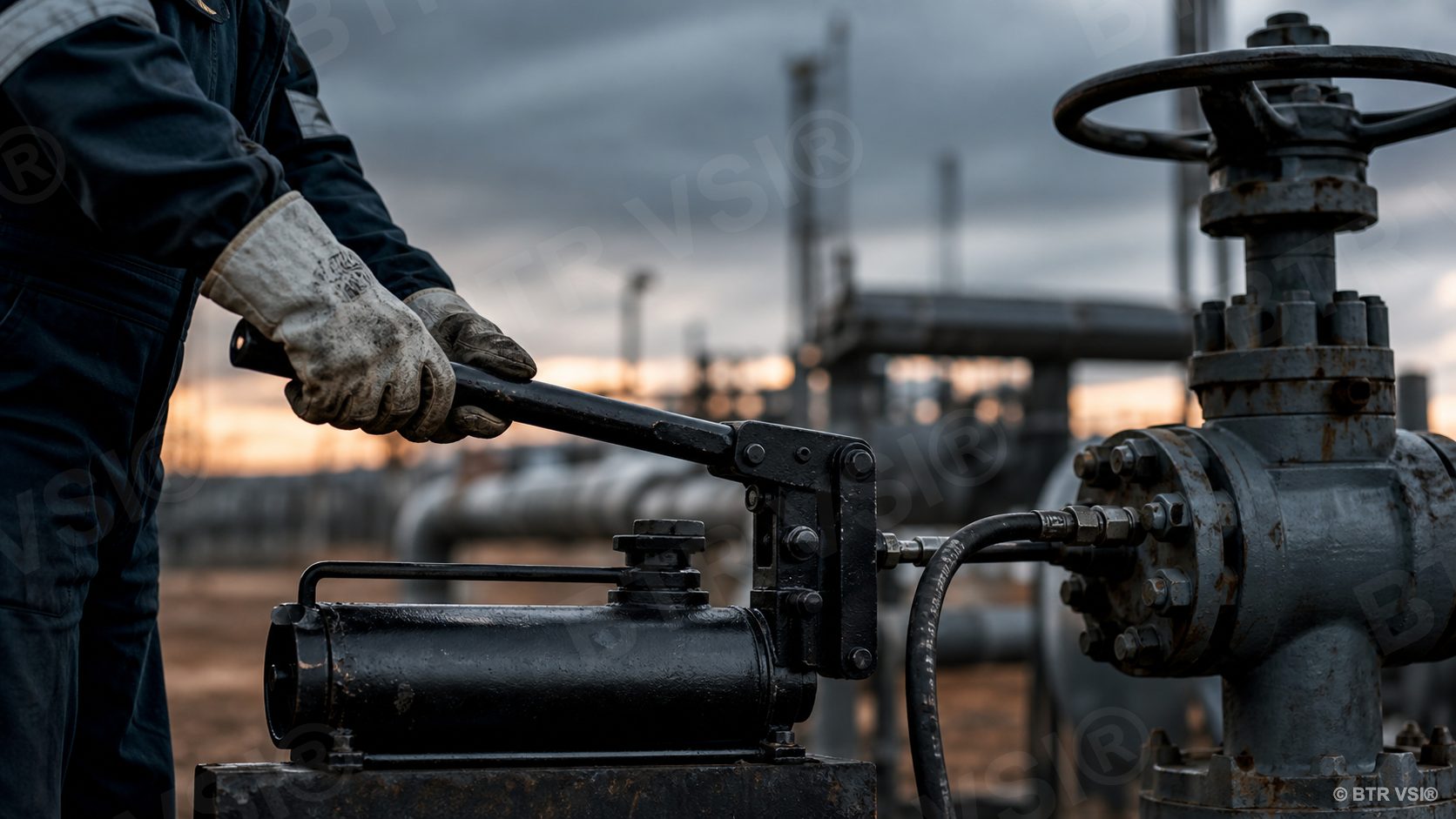
Reliable sealant guns depend on clean product paths, sound seals, careful storage and recorded inspection. Clean the equipment after approved use, protect open connections and remove damaged or uncertain parts from service. Never use a live valve to test questionable equipment.
Knowledge · Injection equipment
Keeping sealant guns reliable
Care routines that protect injection equipment before, during and after field work.
Reliability begins before the first stroke
A sealant gun may spend more time stored than operating. Poor storage and dirty handling can therefore create the next field failure.
Before use, confirm the valve has suitable injection fittings in good condition. The design and service must suit injection, and site rules and the permit-to-work must allow the job.
Equipment care does not make an unsuitable valve task acceptable. It only helps known injection equipment perform as intended within its permitted limits.
1. Inspect before each field task
- Confirm the gun identity, service status and permitted pressure from controlled records.
- Inspect the body, product container, controls and visible seals for damage or leakage.
- Check threads, outlets and coupler interfaces for wear, contamination or distortion.
- Confirm the pressure indication is readable and accepted by the site procedure.
- Review the hose, coupler and adapter as part of the same system.
Do not start work if identification, condition or service history is unclear. Quarantine the equipment and arrange inspection by a competent person.
2. Protect the product path during use
Keep product containers, filling points and open connections clean. Small contaminants can obstruct passages, damage seals or enter the valve system.
Use only the selected product and compatible equipment. Mixing unknown residues can change product behaviour or block delivery.
Watch the gun, hose and valve connection throughout controlled injection. Pressure rise or changing resistance may indicate conditions in the path, but cannot confirm correct product distribution.
Stop if pressure behaves outside the agreed range, a connection moves, or leakage appears. The high-pressure safety guide gives the wider stop-work rules.
3. Clean without damaging the equipment
Follow the equipment instructions and approved site method for cleaning. Do not improvise with unknown cleaners, sharp tools or forced pressure.
- Make the system safe under the approved procedure before any care work begins.
- Remove external product without pushing dirt into ports, threads or seal areas.
- Clean the permitted product path with compatible materials and the stated method.
- Inspect removed parts and seals before approved reassembly.
- Protect every clean opening as soon as the work is complete.
If hardened residue cannot be removed by the approved method, stop. Further dismantling or pressure testing belongs in a suitable service setting.
4. Store the gun ready for inspection
Store the gun clean, protected and identified. Keep it away from contamination, uncontrolled heat, moisture and physical damage.
Do not leave a hose connected merely to save time. Separate parts only when the approved procedure allows, then protect each interface.
Storage records should show condition, last inspection and any open defect. The next operator should not have to guess whether a gun is ready.
The same discipline applies across the complete valve service field kit. A clean gun paired with an unknown coupler remains an unknown system.
5. Recognise service and retirement signals
Common warning signs include repeated leakage, damaged threads, unstable controls, unreadable indication and recurring loss of delivery. Other internal faults may exist even when the outside looks sound.
Repeated faults need assessment, not repeated field adjustment. A competent service programme should inspect, repair and test equipment against the maker's requirements. The sealant injection guide explains where equipment condition fits the full task.
See our guide to repair and retirement criteria when faults return. BTR VSI also provides field service and training for planned valve work.
Where reliable condition cannot be shown, remove the gun from service. Equipment availability never outranks pressure safety.
Common questions
Sealant gun care questions
How should a sealant gun be stored?
Store it clean, protected and identified, with open connections covered. Its record should show condition, last inspection and any defect awaiting service.
Can a live valve be used to test an uncertain gun?
No. Quarantine equipment with unclear condition, identity or service history. Inspection and testing belong in a suitable setting under an approved procedure.
What does an unusual pressure response mean?
It may indicate resistance, blockage, a connection problem or a valve condition. It does not confirm any one cause, so stop and assess the system.
When should a sealant gun leave field service?
Remove it when damage, leakage, unstable controls, unreadable indication or uncertain history prevents reliable use. A competent person should assess repair or retirement.
Resolve an equipment concern
Send the gun condition. An engineer replies within 24 hours.
Include the equipment identity, visible fault, service history and task it was supporting.